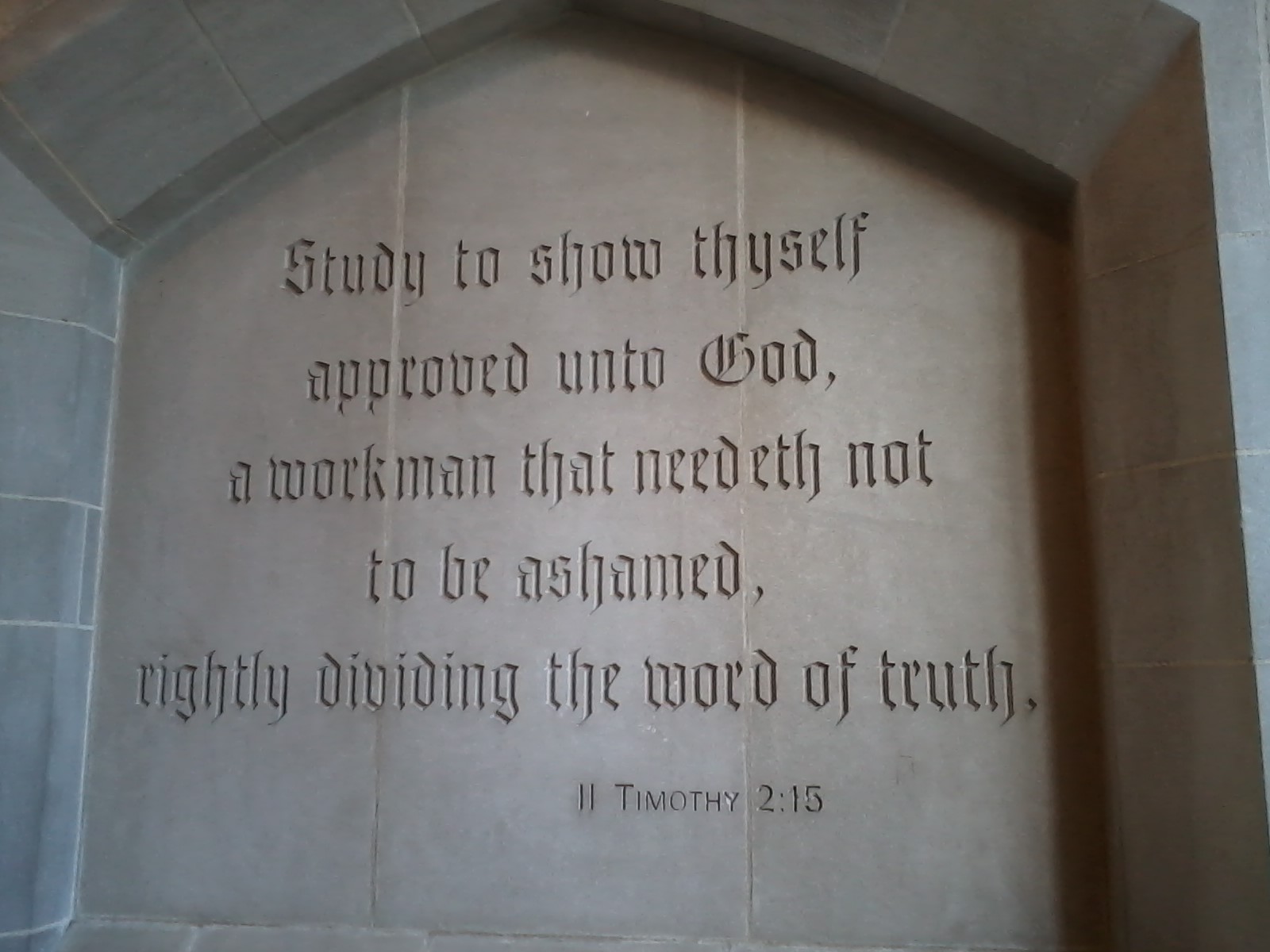
A Workman Studies 2 Timothy 2:15
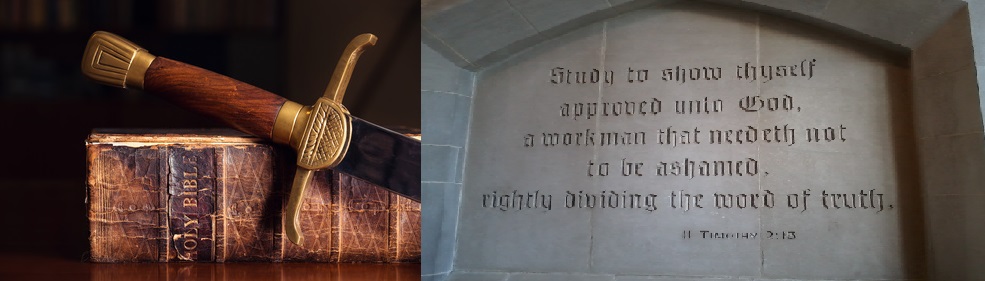
Study to shew thyself approved unto God, a workman that needeth not to be ashamed, rightly dividing the word of truth.
—2 Timothy 2:15
I am a dispensationalist. I am a “Pauline dispensationalist”, and I would for most intents and purposes say that I am a “Mid-Acts, rightly dividing Pauline dispensationalist”. I am also a proponent of using the King James Version to study the Bible, and to pass on that which I have studied. You may even say that I am a King James Bible Believer, although to many that have taken on that title I probably wouldn’t qualify because I do not think as they do. I might even be called an “apostate”, which is funny because “apostate” is not found in the KJB, but is a form of the transliteration of a Greek word (yikes) in the underlying text.
I also believe that the depth and strength of doctrine supporting my position as a Pauline Dispensationalist does not rise or fall on the translation and interpretation of one verse, but on the teaching of the Bible as the complete revelation from God.
With that said, I have had it in my mind to write out a short study about the approved workman.
The idea of this workman is that he is going to present his work to God. Paul, in this second chapter of 2 Timothy, has likened to man of God to a soldier, an athlete, a farmer, and now a workman.
As a workman myself for many years, and even a workman as a hobby at times, there are some things that I have learned that may be beneficial to others. If this is the case for you, praise the Lord.
A workman is approved or disapproved according to the quality of his work. This is certainly not about a works salvation, because we know from the big picture, and from very particular verses in the Pauline revelation, that salvation is not of works, but it is the gift of God received by faith:
Ephesians 2:8–10 — “For by grace are ye saved through faith; and that not of yourselves: it is the gift of God: Not of works, lest any man should boast. For we are HIS WORKMANSHIP, created in Christ Jesus unto good works, which God hath before ordained that we should walk in them.”
Let us settle in our minds here and now before continuing that the “workman” here in Paul’s epistle to the Ephesians is God. Our salvation, encompassing all of who and what we are in Christ Jesus is a work of God from start to finish. We are saved by grace through faith in the Lord Jesus Christ, that He died for our sins and that He rose from the dead to declare an accomplished redemption. This salvation by grace through faith is the gift of God. We didn’t plan it, and we didn’t do anything to help bring it to completion. We can boast nothing of who and what we are, nor of our accomplishments since being saved because we are His workmanship created unto the good works that God ordained for us to walk in.
But now that we are walking in them, are we approved of God as workmen walking in them?
A contracted or hired workman is approved by the one who hired him after he has finished the work, and the proof of the approval is that the workpiece is paid for as stipulated in the contract.
The workman in 2 Timothy chapter 2 is told to study to show himself approved unto God. His approval unto God is that God accepts his work.
Two other passages of Scripture should come to mind when thinking of the workman approved unto God. These are from the Apostle Paul’s epistles to the Corinthians. First:
1 Corinthians 3:9–15 — “For we are labourers together with God: ye are God’s husbandry, ye are God’s building. According to the grace of God which is given unto me, as a wise masterbuilder, I have laid the foundation, and another buildeth thereon. But let every man take heed how he buildeth thereupon. For other foundation can no man lay than that is laid, which is Jesus Christ. Now if any man build upon this foundation gold, silver, precious stones, wood, hay, stubble; Every man’s work shall be made manifest: for the day shall declare it, because it shall be revealed by fire; and the fire shall try every man’s work of what sort it is. If any man’s work abide which he hath built thereupon, he shall receive a reward. If any man’s work shall be burned, he shall suffer loss: but he himself shall be saved; yet so as by fire.”
Second:
2 Corinthians 5:9–11 — “Wherefore we labour, that, whether present or absent, we may be accepted of Him. For we must all appear before the judgment seat of Christ; that every one may receive the things done in His body, according to that he hath done, whether it be good or bad. Knowing therefore the terror of the Lord, we persuade men; but we are made manifest unto God; and I trust also are made manifest in your consciences.”
Workmen must build on the foundation on which God has told them to build. A workman must also build with the materials with which God has given him to build. He must not substitute them for inferior materials, or for that matter, equally high-quality materials that are different from the specification that is on the blueprint.
The test by the One giving the workman his work, the final quality control procedure, if you will, is that fire of the day when the work will be tried. Will all of the work that you put in as a workman of God be burned up and turned into ash, causing you to be a workman that is ashamed, or will it abide the fire of the day of the Lord Jesus Christ and thus show you to be a “workman that needeth not to be ashamed”?
This has nothing to do with our eternal position as saved, sealed, seated, and sanctified in Jesus Christ, but it does have everything to do with our being accepted as “approved” workmen.
In the terms of a workman, did I build the structure that God told me to build? Did I do it according to the processes that God required? Did I build it with the materials that He specified? Did I “rightly divide” it?
Much is said by those who I am in some doctrinal agreement with about rightly dividing the Word of Truth, as our apostle directs his beloved son in Christ to do. As I said also, my understanding of the Bible is that the Apostle Paul is specifically the apostle sent by the Lord Jesus Christ to those living in the dispensation of His Grace. This admonition to study and rightly divide the Scriptures does not stand and fall based on the translation and interpretation of this verse.
The context of this command to rightly divide is that of the workman. Nothing has been a greater teaching aid to me than working in my wood shop. When cutting boards to build a structure, if they are not rightly divided, the structure cannot be put together according to the plan. The word underlying the translation to “rightly dividing” is the word orthotomeō, which, much to our chagrin, is not found anywhere else in the New Testament. A word with a similar root is peritomē. The first part if this word is translated “circum” meaning around, like around the perimeter, and the second part is translated “cision”, or cut. The first part of the word translated “rightly dividing” is “ortho” which is common in many words we use, like orthogonal (at a right angle, or in other words “square”, or perpendicular), or orthopedic, which has the idea of the correct structure of the body. The second is cut. Rightly dividing is making the correct cuts. They need to be cut in the right place and in the right orientation.
This is an injunction to do God’s work in God’s way according to His plans and specifications. The workman that shows himself approved will bring the structure that God wants.
Here is a mere illustration of an unapproved workman. This is fiction, so please bear with me:
Let us say a man is a knight in England around the 12th century. He is a saved man who believes on the Lord Jesus Christ as his Savior and his Lord in every way that we understand it. He is also, because of the time and the place in which he lives, devoted to the pope in Rome and the Roman church. As I said, bear with me.
He has accepted the call to do what he has been told is God’s will to give up his life and fortune to go on a crusade to “the Holy Land” and to conquer it for Christ (or so he has been told), and he does it with all his heart in the right place as he seeks to be pleasing to God. He fights valiantly and, in every way, shows himself a hero and a godly warrior. He returns from battle with life altering wounds that speak of his bravery and his devotion to what he has been told is the cause of Christ.
And when he stands before the judgment seat of Christ, all of his work will be burned up. Yes, he did it with the right heart and with the right motivation in his mind. But it was not what God wanted. A sad end to a life of valiant service, is it not?
The reality is that the approved workman will do the work that God has told him to do in God’s way. Yes, his heart must be in the right place, and he must have the right attitude, but this is not enough. He must do it according to the plans and purposes that God gave him and not according to some other counterfeit plans. It also must not be according to plans that were given to other workmen, even though these are also God’s plans. The dispensation of grace was given to Paul the apostle as a “wise masterbuilder” (we get our word “architect” from the underlying Greek word here) to lay the foundation that we are to build on.
Have we studied the plans that the architect has given to us according to the command of God to build the structure that God has tasked us with, or are we building something else according to other plans that will go up in smoke even though we had all of the best intentions?
That is a sobering thought, is it not?
Categories

Charles Miller View All
Husband, father, engineer...Enjoys fishing, archery, guitar, running, and lifting, but most of all reading and studying God's Word.
 Distinguishing Truth
Praise the Lord, thank you, this has encouraged me, because it confirms what the Lord has been teaching me for decades, and is good to see someone else is understanding this truth.
I also am a Pauline Dispensationalist, though many dispute against me on that stance.
Paul was given his ministry by the Will of God, to assist the Body of Christ on how to build on the Foundation of Jesus Christ, and how His Body is to function according to the Lord’s Ways and not upon how “man” thinks he is too function, which we see in this present day “church” system. Which is all basically built upon and after the tradition’s of men, and “best intention’s” and not after Paul’s Holy Spirit inspired revelation’s.
Jesus warned “if His house is built upon the sand” a false foundation, when the storms, rains, winds come and blow upon it, it will not stand. How great that fall is and shall be.
Matt 7:24-27
The Lord bless you….
LikeLike
Dear Sir,
There seems to be a disconnection in the church with teaching/learning appropriate interpretation skills and critical thinking skills. How do I advocate for it in the church?
on a personal note, my interpretation skills and critical thinking skills have improved with regards to the scriptures after reading and digesting and putting into action fee and Stewart’s book how to read the Bible for all its worth. I’ve gone so far as to prepare a 12-week course for presentation of the material in that book for my church, however I’m constantly met with resistance regarding its necessity. Or the argument is made that people don’t need anything but the scriptures to interpret the scriptures correctly. Any suggestions on how to combat that argument? Thank you kindly.
Sincerely,
Leroy Wilson
LikeLike
Hi Leroy, thanks for the comment and for the comment. I will send you an email with some more thoughts on this. I am not familiar with the Fee and Stewart book that you mentioned but I can tell you this: I never really learned a “Bible Study method” as just that, but I did have people, (I was blessed with two parents who both studied the Bible and believed it) who modeled it. When the Bible spoke, it was the authority. It does take time and dedication, but the first and most important skill is to believe what you read where you read it and not to change it to make it fit a preconceived idea of what it should say. Sometimes too, it is a matter of not getting buried in the details so much that we miss the thrust of what the Lord is saying in the Bible.
The details matter for sure, but so does the big picture. We need to be able to focus on both.
I don’t know how to necessarily combat an argument about not needed the skills to interpret the Bible without knowing a little more about why you are seeing the need. I would also not really be able to say much without knowing other things about your church situation.
One thing that is important: Know what the Bible says and believe what it says. Not what you think it says, but what it actually says. Admit when you can’t put it together and wait for the Lord to give you more light on the matter. But believe the Word of God as written.
As I said, I’ll email you with some follow-up to this conversation. Hope this helps a bit.
LikeLike