The Warnings in Hebrews
In a comment on a previous article, I was accused of an “oversight” in not addressing the warnings in Hebrews.
Yes, I did not address them, but not because I was trying to avoid them. I did not address them at that time because they are not about the question of the eternal security of the believer. These passages are about another matter. This article that you are now reading is about the warning passages in the Epistle to the Hebrews.
I’ll be brief about my understanding of the Epistle to the Hebrews as whole. There is much to say as to why I hold the position that I do, but I can sum it up simply. Paul1 wrote Hebrews to a group of people who since the call of Abraham and God’s covenant with him have had a long history with God. They were the children of that covenant (Acts 3:25), and that history told of obedience, and sadly more often, disobedience to God. According to Ussher’s dating, the Epistle to the Hebrews was written almost 2000 years2 after the call of Abraham.
The nation of Israel, as a nation, was the partaker of that covenant, and individuals born into that nation were born into that covenant. This did not give them righteous standing before God, but it did give them “places at the table” that we Gentiles did not have (Ephesians 2:12). It also gave them responsibilities that we did not have. These were the natural branches that the apostle Paul speaks of in Romans 11:13–25. The breaking off of those unbelieving branches was not a matter of losing salvation as we understand it, but of not partaking of all that should be coming to them as the naturally sprouting branches of God’s olive tree. It was not entering into the promises that God made to the fathers because of unbelief.
This breaking off of the natural branches became a crisis point when the long-promised Christ (Messiah, God’s Anointed) came to His people as their Savior and promised King. He came to save His people from their sins (Matthew 1:21), but they did not receive Him (John 1:11).
The Jews of Jerusalem were given opportunity to repent of their rejecting and crucifying God’s Anointed as chronicled in the early chapters of Acts but as a group they would not hear it. Individual Jews did, but nationally the message of the Twelve Apostles was rejected.
Saul of Tarsus (later known as the Apostle Paul), while a Christ rejecting Jew himself who went about seeking to destroy those that did believe and receive Jesus the Christ, was saved on the road to Damascus. Christ stopped him in his tracks and chose him to bear His Name “before the Gentiles, and kings, and the children of Israel” (Acts 9:15).
During the time of the ministry of Christ through His twelve apostles to Israel, there were Jews that believed, but many more that did not. Those that believed were still 100% Jews, not converts from Judaism to Christianity. Those that believed were the faithful remnant of an otherwise apostate nation. They lived still as part of the Jerusalem based temple worship as we see in Acts as late as chapter 21, where James boasts to Paul of the many thousands of Jews which believe, that they are “all zealous of the law” (Acts 21:20).
It was settled in Acts 15 that the Gentiles who believed were not under the law, but what about the Jews that believed? After Paul preached to the synagogues outside of Jerusalem that “all that believe are justified from all things, from which ye could not be justified by the law of Moses” (Acts 13:39), should they still be living under that law that could never justify but only condemn? Paul’s Epistle to the Hebrews would be God’s word to them.
As I study the epistle, I see a two-fold message to a split audience. There is a message to those of the Hebrews who do believe, and warnings to those who do not believe. So now let us address these warning passages.
Hebrews 2:1–4 — “Therefore we ought to give the more earnest heed to the things which we have heard, lest at any time we should let them slip. For if the word spoken by angels was stedfast, and every transgression and disobedience received a just recompence of reward; How shall we escape, if we neglect so great salvation; which at the first began to be spoken by the Lord, and was confirmed unto us by them that heard Him3; God also bearing them witness, both with signs and wonders, and with divers miracles, and gifts of the Holy Ghost, according to His own will?”
Chapter 1 begins with the Apostle saying something that they all would agree with, that God spoke in times past to the fathers by the prophets. He then says that God now is speaking to them by His Son. This, we can see is not strictly the words that Christ spoke in His ministry among them, but that He was Himself God’s Word to them. The apostle continues to declare the greatness of the Son over the angels, who none of this audience would argue against their greatness. He then warns them in the beginning of chapter 2 from their history they had known what happened to those who rejected God’s Word in the past and the severity of how great a sin it would be of rejecting God’s greatest Word to them, which is His Son, Jesus the Messiah.
Hebrews 3:6— “But Christ as a son over His own house; whose house are we, if we hold fast the confidence and the rejoicing of the hope firm unto the end.”
Hebrews 3:12–14 — “Take heed, brethren, lest there be in any of you an evil heart of unbelief, in departing from the living God. But exhort one another daily, while it is called To day; lest any of you be hardened through the deceitfulness of sin. For we are made partakers of Christ, if we hold the beginning of our confidence stedfast unto the end;”
In these verses, it is not about Christians4 being once saved and needing to persevere to the end of their lives in order to actually be saved. Neither is it about “Jewish tribulation believers” not taking the mark of the beast5. It is about the people under God’s covenant promises who depart from God by not believing His Word to them, His Son, His Christ! The beginning of their confidence is the word of God to them in time past. The end is Jesus Christ. They are to hold fast from the beginning to the end.
Hebrews 4:1 — “Let us therefore fear, lest, a promise being left us of entering into His rest, any of you should seem to come short of it.”
Again, there is a promise to the people of Israel to enter into God’s rest, but if they are in unbelief, they will not enter into it. Being in unbelief is rejecting Jesus Christ.
Hebrews 4:11 — “Let us labour therefore to enter into that rest, lest any man fall after the same example of unbelief.”
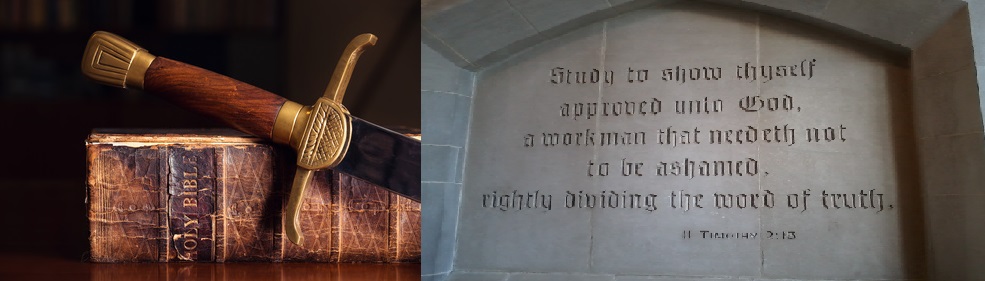
This is the same as the verse above. The word “labour” here is the same as “study” in 2 Timothy 2:15 and to be diligent in Titus 3:12. The stress is on the importance that these people of Israel not “slack off” and put off entering into God’s promises to them through Christ, but to believe God’s Word to them today, and enter into that rest. All who read this, whether Israelites or not, need to take heed to this warning.
Now, the favorite passage of those that argue that once God saves someone that the saved sinner could lose his salvation. Or is it that God could then lose that person’s salvation?6
Hebrews 6:4–8 — “For it is impossible for those who were once enlightened, and have tasted of the heavenly gift, and were made partakers of the Holy Ghost, And have tasted the good word of God, and the powers of the world to come, If they shall fall away, to renew them again unto repentance; seeing they crucify to themselves the Son of God afresh, and put Him to an open shame. For the earth which drinketh in the rain that cometh oft upon it, and bringeth forth herbs meet for them by whom it is dressed, receiveth blessing from God: But that which beareth thorns and briers is rejected, and is nigh unto cursing; whose end is to be burned.7“
If we understand this as the people of Israel at a time of a crisis in their history, it is not a problem passage to us who believe the Bible about the eternal security of the one in Christ. The people of Israel were once enlightened. The Light of the world was with them physically. They tasted the heavenly gift and were made partakers of the Holy Ghost. The Holy Ghost was working among them with great power that was undeniable, and if they would not believe after that, the calls to repentance would cease. Those that did believe would be urged to go on to perfection (Hebrews 6:1), but when “the camp” remains in unbelief, to suffer with Christ outside the camp (Hebrews 13:13).
Hebrews 6:11–12 — “And we desire that every one of you do shew the same diligence to the full assurance of hope unto the end: That ye be not slothful, but followers of them who through faith and patience inherit the promises.”
Again, not a warning of being once saved and then lost, but an encouragement to believe God’s promises from the beginning (the call and covenant promises) to the end (the realization of those promises in Christ). They were the children of the covenant (Acts 3:25) and the children of the kingdom (Matthew 8:12), but neither would be realized while they are in unbelief. The children of the kingdom who did not believe would be cast out into outer darkness. An ominous warning indeed!
The call is to not follow after the unbelievers, but to follow after those that do believe.
Hebrews 10:26–31 — “For if we sin wilfully after that we have received the knowledge of the truth, there remaineth no more sacrifice for sins, But a certain fearful looking for of judgment and fiery indignation, which shall devour the adversaries. He that despised Moses’ law died without mercy under two or three witnesses: Of how much sorer punishment, suppose ye, shall he be thought worthy, who hath trodden under foot the Son of God, and hath counted the blood of the covenant, wherewith He was sanctified, an unholy thing, and hath done despite unto the Spirit of grace? For we know Him that hath said, Vengeance belongeth unto me, I will recompense, saith the Lord. And again, The Lord shall judge His people. It is a fearful thing to fall into the hands of the living God.”
The willful sin here is rejecting Jesus Christ, the Son of God. He is the sacrifice for sins, and there remains no other sacrifice for sins. Rejecting Him is remaining in your sins and remaining in condemnation (John 3:18, 36). This warning in Hebrews is not about a Christian sinning and losing salvation because of it. A Christian is to turn from sins because of his position in Christ (Romans 6:1–4).
Yes, this warning is severe, and I do not downplay its severity. There is a severity to the Hebrew to whom this epistle is addressed if he continues in unbelief. I am also not limiting this to the Jews only, because the word of God has been sent to all nations for the obedience of faith (Romans 1:5, 16:26), so as you are reading this, do not tread under your feet the Son of God by rejecting Him, but believe God’s word and believe His gospel to you, because Christ died for YOUR sins, and rose from the dead.
Hebrews 10:38 — “Now the just shall live by faith: but if any man draw back, My soul shall have no pleasure in him.”
Again, the contrast is not about going back under the law after believing (which they are urged in other places to come out of to the better things of Christ), but of drawing back and not believing in Christ unto salvation.
Hebrews 12:25 — “See that ye refuse not Him that speaketh. For if they escaped not who refused him that spake on earth, much more shall not we escape, if we turn away from Him that speaketh from heaven:”
Again, follow after Christ and His Word to you from Heaven. This is the admonition, and it is specifically to these Hebrews who may be on the fence. He is speaking to them from Heaven, and “we” collectively will not escape His judgment if we refuse Him. In context this is to the Hebrews with a history as the people of God. He is speaking now to them from heaven through His apostle, Paul, and they are being warned of the danger of rejecting His Word from Heaven. All other nations are also the recipients of the Word of God from Heaven as Paul said in Romans (Romans 1:5, 16:26), so this warning is to all people, hear Him, “For our God is a consuming fire” (Hebrews 12:29).
The last warning that I will address is in the last chapter:
Hebrews 13:4 — “Marriage is honourable in all, and the bed undefiled: but whoremongers and adulterers God will judge.”
This is not inconsistent with any of Paul’s other epistles. God does not take these sins lightly and Christians (yes, Christians) will answer for them. This does not mean eternally cast out, but do not take this lightly either. The Corinthian epistles also warn in this matter, as do all of Paul’s other epistles. We are beseeched to not walk after the lusts of the flesh but to walk in the Spirit (Galatians 5:16-26), and to abstain from fornication (1 Thessalonians 4:3).
I will leave off with a few other verses in Hebrews:
Hebrews 5:9 —“And being made perfect, He became the author of eternal salvation unto all them that obey Him;”
Is eternal salvation temporary?
In context of the entire epistle, the obedience is the obedience of faith and Christ is the author of eternal salvation to those that obey. Eternal salvation cannot be lost!
Hebrews 7:25 — “Wherefore He is able also to save them to the uttermost that come unto God by Him, seeing He ever liveth to make intercession for them.”
Blessed assurance of eternal salvation! Those who are saved by Him are saved as long as He lives, which is forever, and He makes intercession for them, forever!
Hebrews 10:14 — “For by one offering He hath perfected for ever them that are sanctified.”
It is the greatness of Christ’s offering once for sins that keeps the one who is saved, saved.
These warnings should be taken very seriously, especially since the Word of God for obedience of faith has been sent to all nations. Christ died for our sins, was buried, and rose again the third day from the dead and is seated at the right hand of God, enthroned as Savior. He truly is also coming again to rule and reign and will sit as King and Judge. If He is your Savior, which He is if you have believed His Gospel, you and your sins are already judged, and you are already seated with Him eternally in Heaven. If you have not obeyed His Gospel and believed, He is your judge and well, our God is a consuming fire! Do not meet Him that way! The opportunity is now!
“Behold, now is the accepted time; behold, now is the day of salvation.” — 2 Corinthians 6:2.
End Notes:
- My King James Bible says that Paul is the writer and I prefer to not try and correct the Bible. I have other reasons to believe this as well, but to argue the point endlessly is not the purpose of this article. ↩︎
- Ussher’s dating shows B.C. 1920 for the time of Abraham’s call in Genesi 12 in the Scofield Reference Bible 1909/1917. ↩︎
- Acts 13:31 ↩︎
- Throughout, I speak of Christians not as “adherents to the Christian religion”, but as true believers in the gospel of Jesus Christ, thus as those that are truly saved. ↩︎
- I don’t see anything about the mark of the beast in Hebrews. It is very hard to read this in, as some do. ↩︎
- None would ever say it this way, but the salvation of the sinner by grace through faith in the finished work of Christ on the cross is a work of God. The preservation of the former sinner turned saint is also the work of God, and if that salvation fails, whose work is it that failed? ↩︎
- I wrote several years ago at length about this passage here ↩︎

Charles Miller View All
Husband, father, engineer...Enjoys fishing, archery, guitar, running, and lifting, but most of all reading and studying God's Word.
 Distinguishing Truth
Brother Charles,
An outstanding article on this sometimes very controversial subject.
You have enlightened me on many aspects relating to Hebrews, thank you.
I wish that you would someday address the topic of Christian Universalism (All will be saved ) as taught by many Christians groups today.
This subject is making strong traction in many evangelical denominations today, even though some who rejected this belief are now adherents.
The scriptures they quote ( twist) often sound very plausible.
The only source I have found that touches on this is Truth Time Radio on YouTube.
Kindest regards and Blessings.
Dennis. New Zealand.
LikeLike