Study…
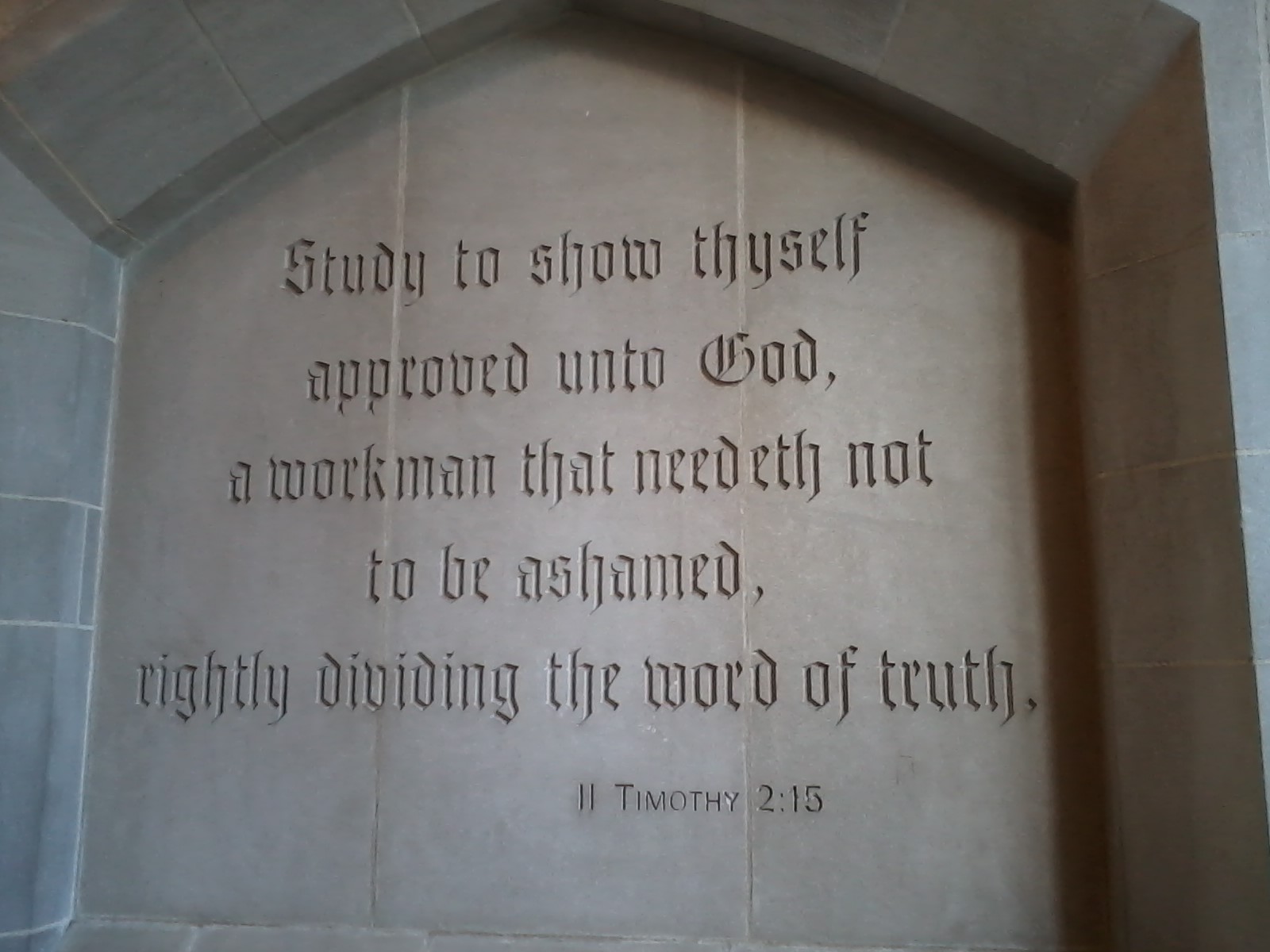
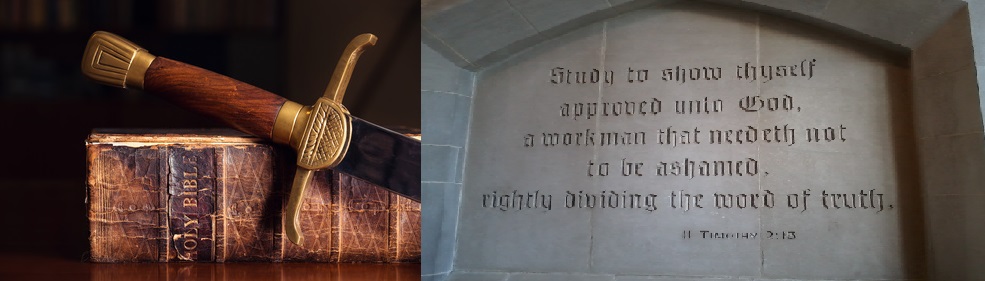
Study to shew thyself approved unto God, a workman that needeth not to be ashamed, rightly dividing the word of truth.
—2 Timothy 2:15
What is the meaning that the Apostle Paul has behind this command to his son in Christ, Timothy, to study?
In much of the pro-King James Version space (of which I am pro-King James, to a certain reasonable extent), this verse which says to study is a big deal. It is true, that in most of the Bible versions that I have available on the Blue Letter Bible site do not use the word “study” but instead translate it “be diligent”, “do your best”, or some variation thereof.
Now the big deal will be made that the KJV is the only version that tells you to “study”. That is almost true, but not entirely. There are a couple of other versions that use the word “study” here. Indeed, it is important to study; but what does it mean to study?
In Bible study, it means getting into the Word, knowing what it says, understanding what it says, believing what it says, and through it getting to know your God, and getting to know His will. But study, even in other pursuits, does not only involve books. For instance, a man studying automobile mechanics would probably have books that he would read to get to understand how automobiles work. He would also spend much time under the hood to practically get to know how it works. As he learns more, he will continue to consult manuals while he opened the hood to get to know better and better how the many parts of the vehicle operate. Studying mechanics is about getting to know how the thing works, and it involves diligence if one wants to do well.
Being diligent versus studying is not the problem between the King James and post-1880 Bibles. There are many other problems, but this is not one of them. To study is to be diligent. It is to “do your best”, although I would argue that too many times when people “just do their best” it is usually not their best.
The issue is that it involves focus. To make a conscious, concerted effort to do everything in your power and ability to make it happen. To “pull out all of the stops” as we might say, to show ourselves approved unto God as we “rightly divide the Word of truth”.
The same Greek word σπούδασον (spoudason) is also used by the Apostle Paul in Titus 3:12 and is translated “be diligent” in that context. It is also used two other times in 2 Timothy where it is translated “do thy diligence”. If we were to use the word “study” in those verses, it would still make sense, as when the apostle Paul says in 1 Thessalonians 4:11 to “study to be quiet”. While this is a different underlying Greek word translated into English, the idea is very much the same. It is about putting forth every effort, and there is nothing wrong with using “study” or with “be diligent”.
In 2 Timothy 2:14, the Apostle warns against “striving about words” to no profit, and we should take that injunction seriously as well. The issue is not about words that convey the same meaning chosen differently, but with changing the words in the verses of the Bible making it say what it does not say (see 2 Corinthians 2:17, 5:10; Romans 14:11–12). It is also about taking different manuscripts and using a minority of manuscripts to remove verses or cast doubt on them.
My point here is not to make an issue out of something that is not an issue, thereby distracting from things that really are an issue. The big issues are underlying manuscripts that the publisher not only translates but changes the meaning by importing what the person thinks that it means into the text. This appears to give the interpretation the authority of the Word of God when it is only an opinion. For instance, Romans 6:1–4, as in the King James Version:
“What shall we say then? Shall we continue in sin, that grace may abound? God forbid. How shall we, that are dead to sin, live any longer therein? Know ye not, that so many of us as were baptized into Jesus Christ were baptized into his death? Therefore we are buried with him by baptism into death: that like as Christ was raised up from the dead by the glory of the Father, even so we also should walk in newness of life.”
Compare that with this from the New Living Translation:
“Well then, should we keep on sinning so that God can show us more and more of his wonderful grace? Of course not! Since we have died to sin, how can we continue to live in it? Or have you forgotten that when we were joined with Christ Jesus in baptism, we joined him in his death? For we died and were buried with Christ by baptism. And just as Christ was raised from the dead by the glorious power of the Father, now we also may live new lives.”
There is a very different meaning between the two translations because interpretation has been overlayed onto the second example. The translator’s interpretation appears to have the authority of scripture because that interpretation is in the text of the Bible. That is a big problem.
I mentioned this one because I saw it on a church website at one time when reading its stand on why it baptizes and I thought, wow, this church says that baptism is not required for salvation, but from reading the Bible verses that it uses, it sure sounds required in that version. Granted, there is still no water mentioned.
I am a Bible believer. I study the scriptures to know God, to know His Word, and to know His will. I study His Word so that I may better know my Lord Jesus Christ. I am also diligent to say only what His Word says and to not, knowingly, import my own meaning onto it to give my opinion the authority of “thus saith the LORD”.
I believe that the King James Version that I hold in my hands, and that I read, is the Word of God. I don’t seek to change or alter it to get a better meaning. I believe that it is the Word of God because God’s words coming from another language to my own so that I can read it are still God’s words. A faithful and accurate translation of God’s words are God’s words. It does not require a second divine inspiration, but it requires faithfulness to what is written. Studying and consulting Greek resources does not mean that I am trying to change the Bible, nor do I use these resources to change the Bible. I do it to get a better understanding of it. I will never alter my English Bible with my less-than-elementary understanding of Greek that I learned by reading Greek books that are written in English. I also won’t count as apostates those that use other versions only for using other versions. While using other versions can lead to wrong doctrines and apostate teachings, it cannot be denied that many who have used or still use the King James also are wrong and sometimes apostate. I would very strongly make the appeal that the Bible that has been the Bible for 400+ years is a better foundation to stand on than the Bible that is the new “most accurate translation ever” until another is published in about 10–20 years.
Remember, that it is unto God that we seek to show ourselves approved, for we must all stand before the judgment seat of Christ (Romans 14:10, 2 Corinthians 5:10).
Study, to show yourself approved unto Him. Do what He says to do the way that He says to do it. The plans and specifications of His building are in His word, and the particular plans for you are in Paul’s epistles, as the Lord Jesus sent Paul to lay the foundation (1 Corinthians 3:10) and as the “pattern to them which should hereafter believe on Him [Jesus Christ] to life everlasting” (1 Timothy 1:16).
But preach the Book. When you preach the Book and live by the Book, you will much more effectively show that you believe the book.
Categories

Charles Miller View All
Husband, father, engineer...Enjoys fishing, archery, guitar, running, and lifting, but most of all reading and studying God's Word.
 Distinguishing Truth
2 thoughts on “Study…” Leave a comment ›